Dolphin Rangers Adventure Tourism Logo
Dolphin RangersADVENTURE TOURISM
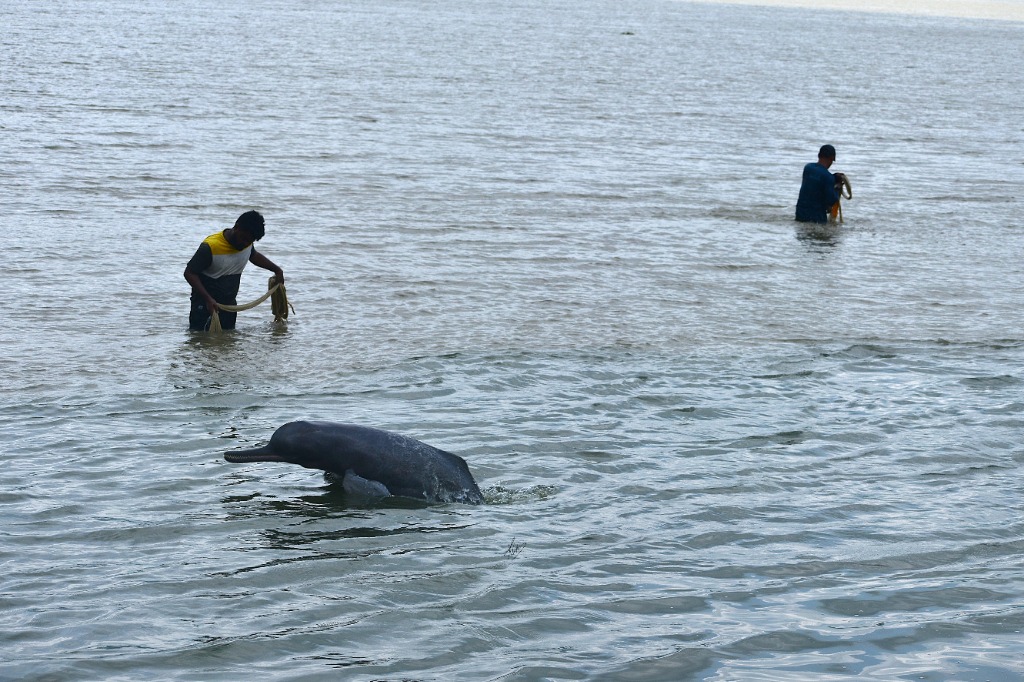
Gangetic river dolphin (Platanista gangetica) surfacing in the Brahmaputra river near traditional fishermen in Assam
✦Species Guide

The Gangetic River Dolphin

India's National Aquatic Animal and the gentle guardian of the Brahmaputra. Discover how this ancient freshwater mammal lives, navigates, and thrives in Assam.

Scientific Name

Platanista gangetica

Assamese Name

Xihu (হিহু)

National Status

National Aquatic Animal of India

Primary Sense

Ultrasonic Echolocation (Effectively blind)

Habitat

Deep Brahmaputra river channels & confluences

Breathing Interval

Surfaces every 30 to 120 seconds

🔬

Remarkable Biology & Adaptations

The Gangetic river dolphin is one of only four obligate freshwater dolphin species on Earth. Having adapted to the murky, silt-dense currents of the Brahmaputra over millions of years, its eyes lack crystalline lenses. Instead of vision, it navigates with an exquisite biological sonar, sending out rapid acoustic clicks to detect fish, sandbar contours, and obstacles with pinpoint accuracy.

🌊

Surfacing & Feeding Behaviour

Unlike oceanic dolphins, Gangetic dolphins do not leap performatively in acrobatic arcs or bow-ride motor vessels. Instead, they surface with quiet elegance — briefly exposing their long, slender snout, distinctive dorsal ridge, and blowhole to exhale and inhale before slipping back beneath the silt. They thrive in counter-current eddies where river flow slows and prey fish congregate.

🛡️

Conservation Status & Vulnerability

Classified as an Endangered species under international conservation red lists and granted Schedule I highest legal protection under India's Wildlife Protection Act. Major threats include dam barrages, accidental entanglement in gillnets, chemical pollution, and unregulated high-wake boat traffic. Ethical tourism creates local livelihood incentives to protect their habitat.

🤝

Our Responsible Observation Code

Dolphin Rangers follows strict river ethics: keeping boat engines at idle or off when near dolphins, maintaining respectful non-crowding distances (minimum 50-100 meters), never pursuing or crossing a pod's trajectory, and strictly capping boat time around feeding areas. Observation is a privilege of patience.

🌿Guest River Etiquette

How We Protect Them on Every Safari

When you travel with Dolphin Rangers, you directly support ethical boat practices that protect wild populations:

  • ✓Maintain appropriate distance from river dolphins at all times.
  • ✓Never chase dolphins, cut across their path, or herd animals toward the boat.
  • ✓Avoid repeated approaches to the same animal or group.
  • ✓Minimise engine disturbance; idle or cut engines when observation allows.
  • ✓No feeding, touching, or attempting to attract dolphins.
  • ✓No swimming with dolphins.
  • ✓Follow designated routes and local navigation practice.
  • ✓Respect fishing communities, ghats, and private river use.
  • ✓Follow applicable wildlife, Forest Department and boating regulations.

Field notes

The river, occasionally, in your inbox.

Seasonal notes, expedition windows and conservation writing. No fabricated sightings. Unsubscribe at any time.

WhatsApp